Operations
Building in Public: Why Attention Became the Real Moat
Why building in public beats building in secret for 2026 founders: when products are copyable, the durable moat is the audience and trust you build along the way.
Startups 20 July 2026 · 6 min read
The instinct runs deep: build in secret, protect the idea, reveal it fully formed so nobody can steal it. For a long time that instinct made sense. It makes far less sense now, and clinging to it is quietly costing founders the one advantage that actually lasts.
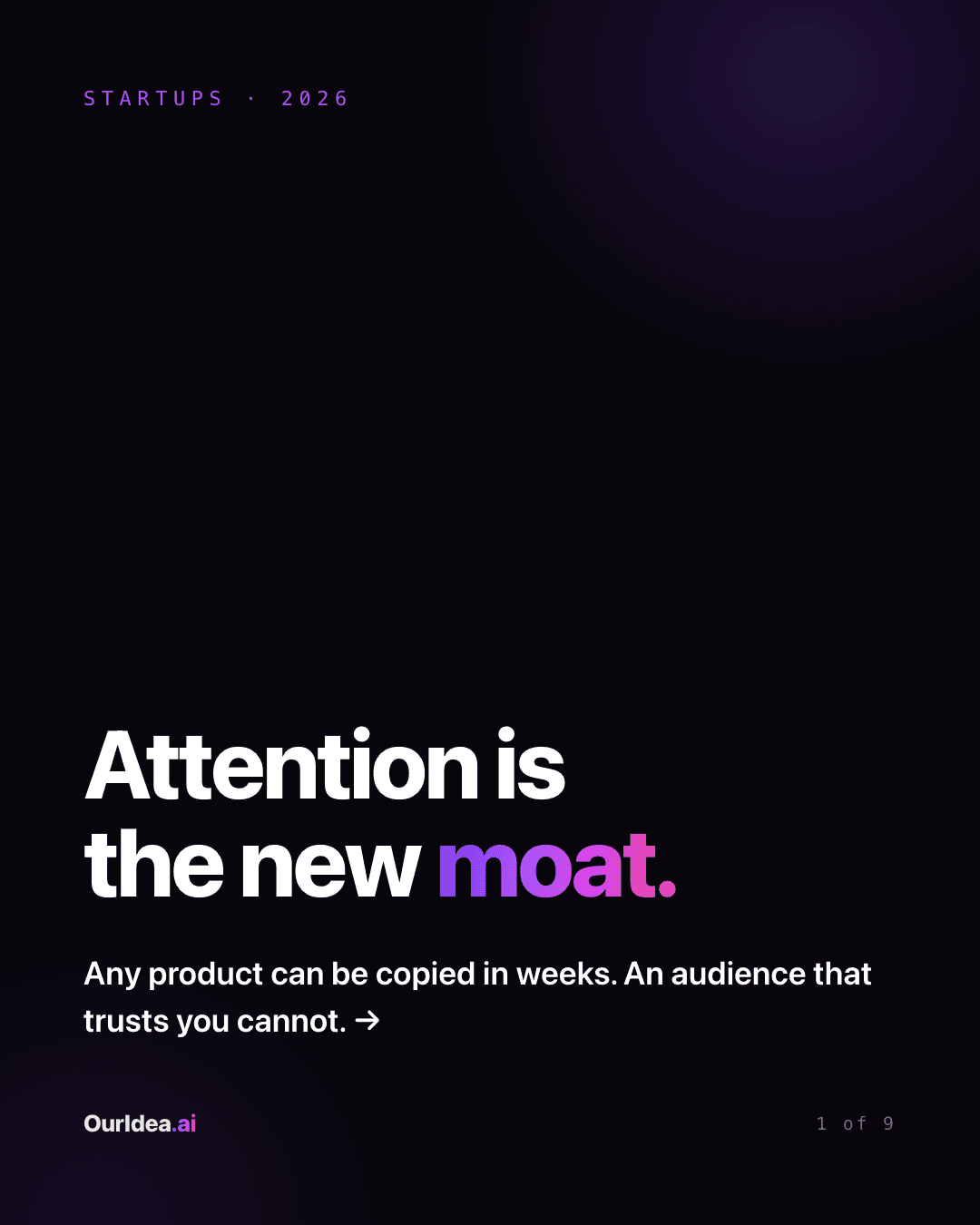
The reframe: in a world where any product can be copied in weeks, secrecy protects almost nothing, and the real asset, an audience that trusts you, can only be built out loud. Attention is the moat now, and you cannot build it in the dark.
The secrecy myth
Founders overvalue their idea and undervalue everything else. The uncomfortable reality is that ideas are cheap and abundant, execution is what matters, and no competitor is going to build your exact company from a few public posts. What people fear, someone stealing the idea, almost never happens. What actually happens, launching to total silence because nobody knew you existed, happens constantly.
Secrecy defends against a rare risk while exposing you to a common one. That is a bad trade.
What building in public actually buys
An audience that arrives before the product. When you build out loud, sharing the problem, the process, the lessons, you gather people who care about what you are making long before it ships. Launch day stops being a cold start and becomes a moment you invite a crowd that already trusts you.
Trust compounded over time. Every honest update, every useful thing you share, every visible struggle handled with integrity, deposits into a reputation. That reputation is what makes your next thing land instantly, and it cannot be forked from a codebase.
Feedback while it still matters. Building in secret means you find out you were wrong on launch day, expensively. Building in public means the market corrects you continuously, cheaply, while there is still time to change course.
Serendipity. Being visible attracts the things you cannot plan: the right collaborator, the unexpected customer, the introduction that changes everything. None of that finds you in stealth.
The real reason most founders do not
It is not strategy, it is fear. Building in public means being seen before you are ready, risking looking foolish, exposing the messy middle. Secrecy is often just a respectable name for hiding until it is safe, and it is never safe, so the reveal keeps getting delayed.
But the discomfort is the point. The founders who build in public trade the comfort of privacy for the compounding asset of attention, and they look brave doing it. Mostly they have just accepted a truth the secretive founder is still avoiding: nobody cares about your product yet, and the work of making them care starts long before the product is done.
How to do it without oversharing
Building in public does not mean publishing your bank balance or your source code. It means sharing the journey, the problem you are chasing, what you are learning, the honest ups and downs, in a way that brings people along. You control the altitude. The point is not exposure for its own sake, it is building a relationship with the people you will one day ask to buy.
The old moat was secrecy. The new moat is the audience you can only build by being seen. Stop protecting an idea nobody is trying to steal, and start building the attention that no competitor can copy.
Frequently asked questions
Should founders build in public or keep their idea secret?
For most founders in 2026, building in public wins. Secrecy protects an idea that competitors are unlikely to steal, while exposing you to the far more common risk of launching to silence. Building out loud gathers the audience and trust that become the real, copy-proof moat.
Isn't building in public risky because people can copy me?
Ideas are cheap and rarely stolen from a few public posts, and execution plus an engaged audience is what actually wins. The greater risk is not being copied but being unknown. The audience you build in public is the thing competitors cannot replicate.
What does building in public actually involve?
Sharing the journey: the problem you are solving, your process, your lessons, and the honest ups and downs, in a way that brings an audience along before the product ships. You control how much you reveal. It is about relationship-building, not exposing everything.
Why do so many founders avoid building in public?
Usually fear rather than strategy: the discomfort of being seen before they feel ready and the risk of looking foolish. Secrecy becomes a respectable excuse to hide until it feels safe, which it never does, so the work of building an audience keeps getting postponed.
View more articles
Learn actionable strategies, proven workflows, and tips from experts to help your product thrive.