Growth
How to Launch a Startup When Nobody Knows Who You Are
How to launch a startup with no audience: positioning, the right first channel, a launch-day sequence, and what to measure. A plan for founders starting cold.
Growth 18 July 2026 · 6 min read
Most launch advice quietly assumes you already have an audience. Build in public for a year, they say, then launch to your ten thousand followers. Useful, unless you are starting from zero this month.
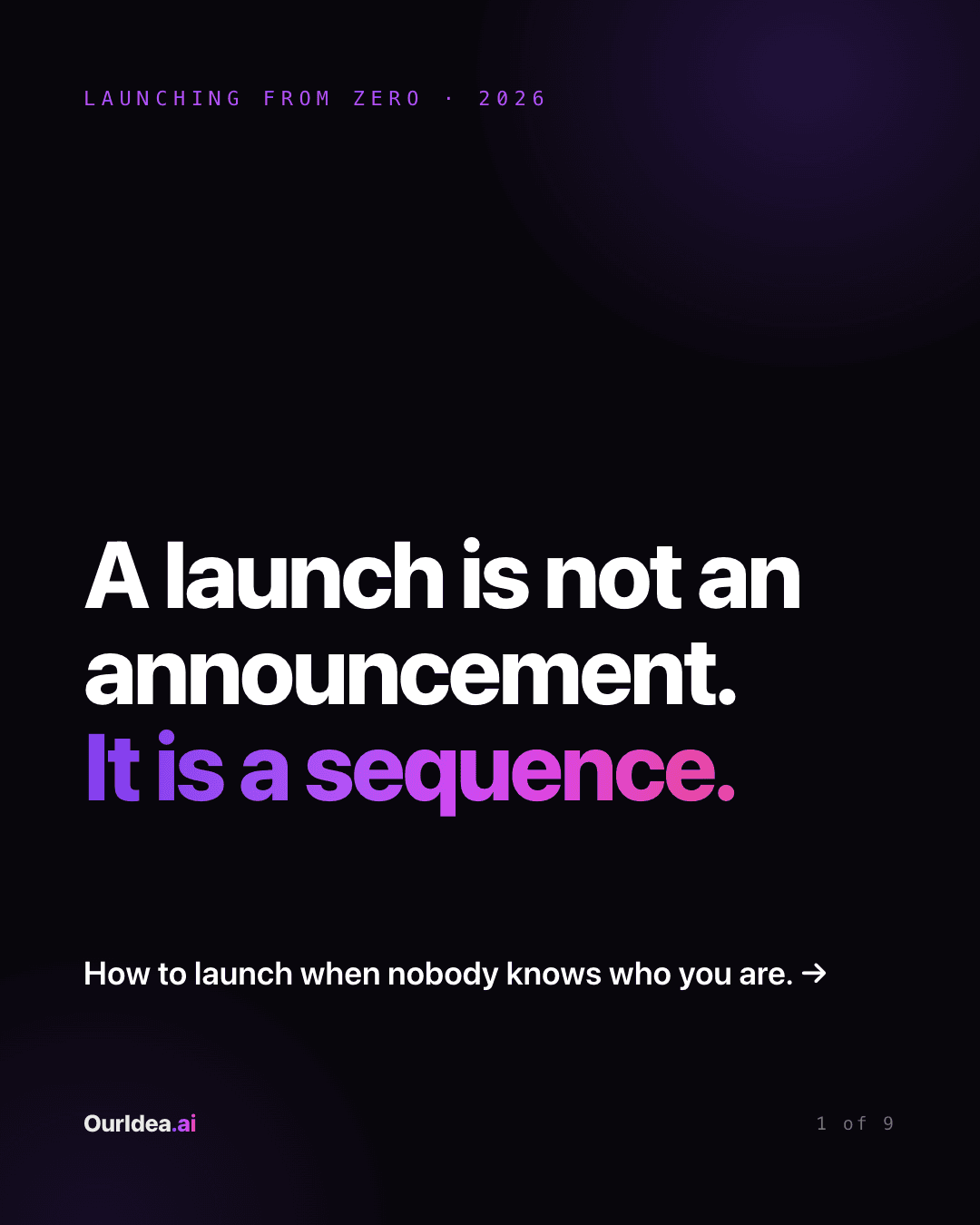
Here is the truth worth quoting: a launch is not an announcement, it is a sequence. Founders with no audience can launch just as well as anyone, they just cannot wing it. What replaces the audience is a plan.
Reframe what a launch is
A launch is not the day you flip your site live. That is a moment. A launch is a sequence of deliberate actions that turn strangers into your first users. When you have an audience, the audience carries some of that weight. When you do not, the sequence has to do all of it. That is fine, because a good sequence beats a lucky post every time.
Step 1: Fix your positioning first
Before you tell anyone about the product, make sure they will understand it in one line. If a stranger reads your homepage and cannot say what you do and who it is for, no amount of launch traffic will convert. Positioning is the multiplier on everything that follows. Name the real alternatives people use today, including doing nothing, and make it obvious why you are the better option for one specific type of person.
Step 2: Pick one beachhead, not everyone
With no audience, you cannot afford a broad launch. Choose the single narrow group who feels the problem most sharply and is easiest to reach. A launch aimed at one clear group lands. A launch aimed at everyone disappears. You can expand later, and you will, but the launch itself needs a target small enough to actually hit.
Step 3: Build a tiny bit of pre-launch heat
You do not need ten thousand followers. You need thirty to a few hundred of the right people who know it is coming. Start a simple waitlist. Post about the problem, not the product, in the communities where your beachhead already gathers. Have real conversations. The goal is not a big audience, it is a warm handful who will show up on day one.
Step 4: Run the launch as a sequence
Pick a day mid-week and run it in order rather than all at once:
Message your warmest contacts directly and ask for honest feedback, not upvotes.
Post a results-led story in the one or two communities where your people are, framed as what you learned, not as an advert.
Send your waitlist a direct, plain email with a single clear action.
Reply personally to every comment and question within a few hours. Presence on launch day is a channel of its own.
One coordinated sequence into the right rooms will always outperform a loud broadcast into empty ones.
Step 5: Measure the right things
Vanity metrics will lie to you on launch day. Watch the signals that actually predict a business: how many of the right people tried it, how many came back, and how many said they would be genuinely disappointed if it went away. Those tell you whether you have something, long before revenue does.
The bigger point
Launching with no audience is not a disadvantage, it is just a different game with different rules. The founders who win it are not the loudest. They are the ones with a clear message, a specific target, and a sequence they run on purpose. Everything an audience would have given you, a plan can give you instead.
Frequently asked questions
Can you launch a startup with no audience?
Yes. An audience makes launch day easier, but it is not required. A clear message, a narrow target group, and a deliberate launch sequence can do the same job. Plenty of successful products launched cold.
Where should I launch if I have no followers?
Launch into the communities where your target users already gather rather than broadcasting to your own empty channels. Niche forums, subreddits, Slack and Discord groups, and relevant launch platforms put you in front of the right people immediately.
How big does a waitlist need to be before launching?
There is no magic number. A few dozen of the right, warm contacts is enough to create momentum on day one. Quality and warmth matter far more than size at this stage.
What should I do before launch day?
Nail your positioning so people understand you in one line, pick one beachhead audience, warm up a small group who know it is coming, and prepare your launch-day sequence in advance so the day itself is execution, not improvisation.
If you can ship the product but the launch feels like guessing, FirstFlight builds the whole plan for you: positioning, your beachhead, the launch-day sequence, and a tracked 90-day runway, for £79. Launch like you have done this before.
Related product: FirstFlight
From the team behind FirstFlight, the AI launch strategist that takes founders from idea to a tracked 90-day launch plan.
View more articles
Learn actionable strategies, proven workflows, and tips from experts to help your product thrive.