Growth
The Solopreneur Economy: What the Data Actually Says
The solopreneur economy by the numbers: how many solo businesses exist, the revenue they generate, AI adoption rates, and what the data means for new founders.
Strategy 20 July 2026 · 5 min read
The one-person business used to be filed under "side hustle": sweet, small, not serious. The numbers have quietly ended that story. The solopreneur is now one of the largest and fastest-growing segments of the economy, and the data is worth looking at plainly.
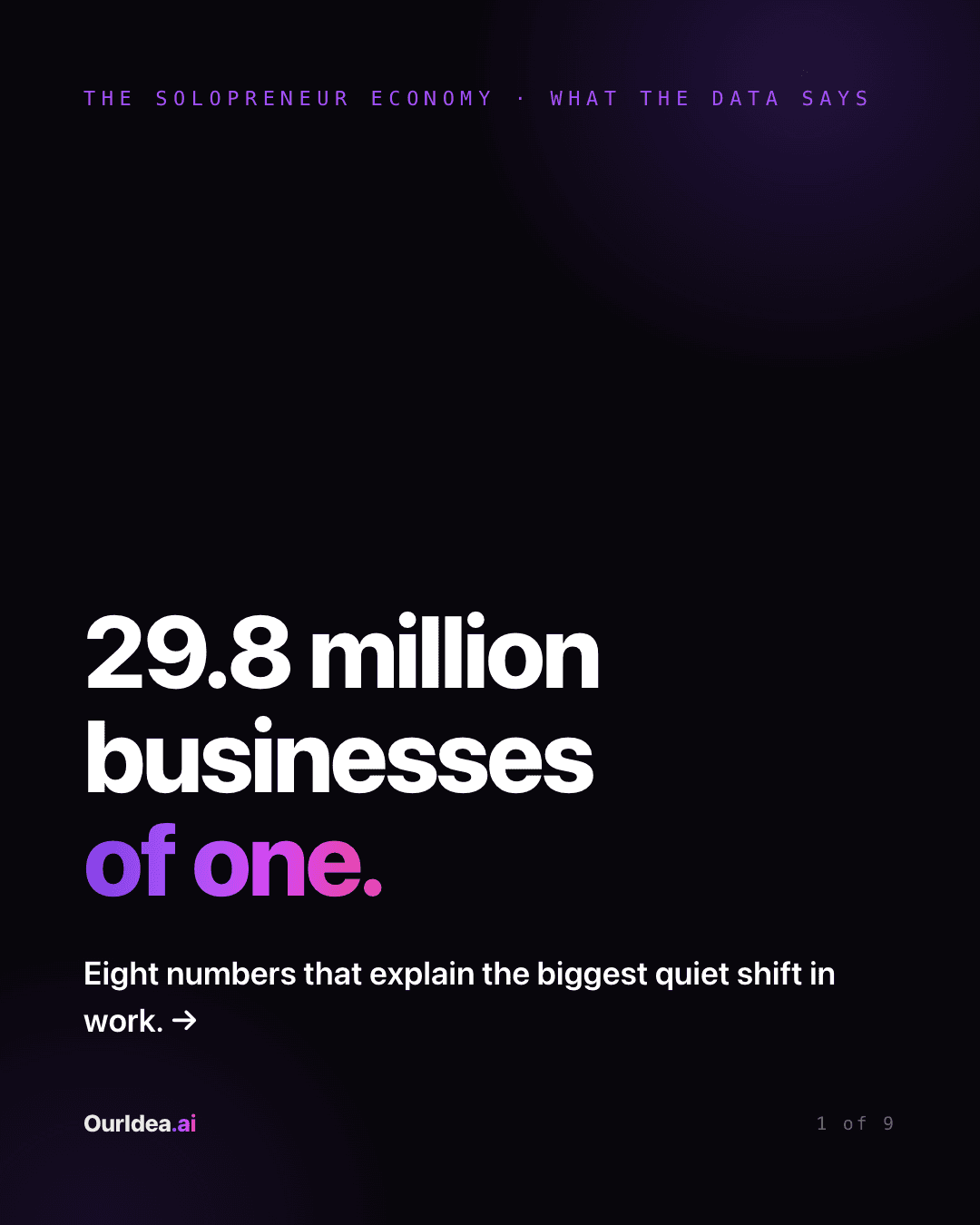
The headline in one line: there are close to 30 million solopreneurs generating well over a trillion dollars in revenue, and AI is pouring fuel on the fire. This is not a fringe trend. It is a structural shift in how businesses get built.
The numbers
Scale. Roughly 29.8 million solopreneurs operate in the United States alone, accounting for around $1.7 trillion in revenue, close to 7 percent of total economic output. That is not a rounding error, it is a major sector.
Momentum. Interest in starting something has surged, with about one in three adults planning to launch a business or side hustle, a steep jump on prior years. The pipeline of new solo founders is swelling.
AI adoption. Around three in four solopreneurs now use AI for content, support, research, or operations, and it is handing back one to four hours a day. The tools that make one-person businesses viable are being adopted fast.
Where they cluster. The largest shares sit in professional services, e-commerce and creative work, and consulting and tech, models where one person can deliver high value without a team.
Why it is happening now
Three forces converged. Building got cheap, so a solo founder can ship a real product without engineers. Distribution got democratic, so one person can reach a global audience without a marketing department. And AI got capable, so the operational middle of a business can be systemised instead of staffed. The old reason you needed a team, that one person simply could not do it all, is dissolving.
The result is that the ceiling on what a single determined person can build keeps rising, and more people keep discovering it.
What the data means for you
The path is real, and it is crowded. More people building means more competition and more noise. The scale of the solopreneur economy validates the model and raises the bar at the same time. Standing out matters more than ever.
Niche and leverage are the winning traits. The data on successful solo businesses is consistent: they solve one specific painful problem for one specific group, and they use tools and automation to punch far above their headcount. Breadth and brute force do not scale for one person. Focus and leverage do.
AI is table stakes, not an edge. When three in four already use it, using AI is no longer a differentiator, it is the baseline. The edge is what you do with the time and capability it frees.
The one-person million-dollar business is no longer a rare anecdote. It is a category with a data trail. The question is no longer whether it is possible, but whether you will build with the focus and leverage the winners share.
Frequently asked questions
How big is the solopreneur economy?
In the United States alone there are roughly 29.8 million solopreneurs generating around $1.7 trillion in revenue, close to 7 percent of economic output. It is one of the largest and fastest-growing segments of the economy, not a niche or a side-hustle footnote.
Why is the one-person business growing so fast?
Three forces converged: building software got cheap, distribution got democratic through social and search, and AI made it possible to systemise operations without hiring. Together they removed the old reason you needed a team, so one person can now run what used to require many.
How many solopreneurs use AI?
Around three in four now use AI for content, customer service, research, or operations, and it returns roughly one to four hours a day. Because adoption is so widespread, using AI is now a baseline rather than a competitive advantage.
What do successful solopreneurs have in common?
They niche down, solving one specific, painful problem for one specific group, and they lean hard on automation and tools to operate far beyond their headcount. Focus and leverage, not breadth or brute effort, are the consistent traits behind solo success.
Related product: abi.
From the team behind abi., agentic business intelligence connected to your live CRM and revenue data.
View more articles
Learn actionable strategies, proven workflows, and tips from experts to help your product thrive.